ENERGY APPLICATION
Ultrasonic Spray Deposition for Battery Materials Research
The next generation of lithium batteries is being built on thin ceramic films. Solid-state batteries (SSBs) replace the flammable liquid electrolyte in today's lithium-ion cells with a solid ceramic ion conductor — and the central manufacturing challenge, as leading researchers have framed it, is producing those ceramics as robust films of 1–20 µm, the same thickness class as the polymer separators in conventional cells, without resorting to high-temperature sintering.
That challenge is a wet-chemical processing problem. And it is exactly the kind of problem ultrasonic spray deposition was built for.
Why researchers are moving from sintered pellets to sprayed films
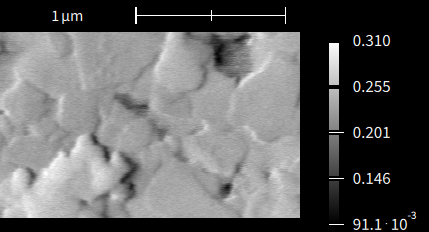
Most solid electrolytes reported in the literature — garnet-type LLZO (Li₇La₃Zr₂O₁₂), perovskite LLTO, NASICON-type LATP — began life as sintered pellets hundreds of microns thick, densified near 1,000 °C. Pellets are excellent model systems and poor products: too thick, too brittle, and too expensive to sinter at scale. A widely cited review in Nature Energy (Balaish et al., 2021) makes the case that up to 75% of projected SSB production costs may be an artifact of assuming classic sintering — and identifies wet-chemical film deposition, including spray pyrolysis, as a route to low-temperature, large-area, sinterless ceramic manufacture.
Spray pyrolysis earns its place on that list for concrete reasons:
- No vacuum chamber. Films deposit at atmospheric pressure onto a heated substrate, at a fraction of the capital cost of PVD.
- Scan speed. Spray setups traverse large areas at meters per minute, versus millimeters per second for dip coating — the throughput argument for manufacturing relevance.
- Solution-phase chemistry control. Multi-cation compositions and dopants are adjustments to the precursor bath, not new sputter targets. Lithium loss — the chronic headache of vacuum-deposited Li ceramics — is addressed by simply over-lithiating the precursor solution.
- The right thermal window. Lithium salts decompose between roughly 100 and 550 °C; heated-substrate spray pyrolysis operates natively in that range.
Where the ultrasonic nozzle fits
A spray pyrolysis film is only as good as the droplets it is built from. Ultrasonic atomization produces a narrow droplet-size distribution at very low spray velocity — droplets drift to the heated substrate rather than blasting it — which translates directly into the two properties battery film work demands:
Uniformity. Thin, even wet layers per pass, built up over multiple passes to a controlled final thickness anywhere from hundreds of nanometers to 20 µm and beyond.
Drying control. Fine droplets and gentle deposition reduce the drying stresses that crack wet-chemical ceramic films — a failure mode the SSB literature explicitly identifies as a processing bottleneck.
MicroSpray's high-temperature ultrasonic nozzle is designed for continuous operation with substrates and fixturing at up to 600 °C — purpose-built for spray pyrolysis of crystalline oxide films. The low-flow, non-clogging ultrasonic design tolerates concentrated, particle-laden, and sol–gel precursors, and the nozzle installs as a standalone component in your own rig: glovebox-adjacent enclosures, inert-gas purged chambers for moisture-sensitive lithium chemistry, custom motion systems, or roll-to-roll fixtures. We supply the atomization; you keep control of the process.
Battery applications for ultrasonic spray
- ✓Solid-state electrolyte films: garnet (LLZO), perovskite (LLTO), NASICON (LATP) and related Li-oxide chemistries from metal-salt and sol–gel precursors
- ✓Electrode and separator coatings: ceramic coatings on separators, protective and interface layers, thin cathode/electrolyte interlayers
- ✓Catalyst and functional layers: fuel cell catalyst inks and gas-diffusion-layer coatings (see our fuel cell coating page)
- ✓Composition screening: rapid precursor-bath iteration across dopant levels and stoichiometries — one nozzle, many chemistries
Representative peer-reviewed research
The following publications are representative of the peer-reviewed literature on wet-chemical processing for solid-state batteries and ultrasonic spray pyrolysis. They are provided as an educational resource.
- A sinter-free future for solid-state battery designs
Hood, Zhu, Miara, Chang, Simons & Rupp
Energy & Environmental Science ·
Open access · no paywall
- Processing thin but robust electrolytes for solid-state batteries
Balaish, Gonzalez-Rosillo, Kim, Zhu, Hood & Rupp
Nature Energy ·
- Ultrasonic spray pyrolysis for nanoparticles synthesis
Tsai, Song, Tsai, Yang, Chiu & Lin
Journal of Materials Science ·
Recommended Equipment
ThermalSpray™ High-Temperature Ultrasonic Nozzle
Thermal isolation design with a titanium atomization core, built for spray pyrolysis of crystalline oxide films on heated substrates
View details →Liquid Delivery (Dosing Pump)
Pulse-free precursor feed for repeatable layer thickness, pass after pass
View details →Talk to an applications engineer, not a sales department
MicroSpray is a US manufacturer of ultrasonic spray nozzle systems in Spring Mills, Pennsylvania — veteran-owned, CAGE-coded (7FBP6), and built around one idea: research groups should be able to buy the nozzle and generator they need and integrate them into the experiment they designed. Tell us your precursor chemistry, substrate, temperature, and target thickness, and we'll match a nozzle configuration to it.