
RESEARCH APPLICATION
Spray Drying
Ultrasonic spray drying nozzles for uniform particle production — narrow droplet size distribution for pharmaceutical microencapsulation, ceramic granulation, and engineered powder research.
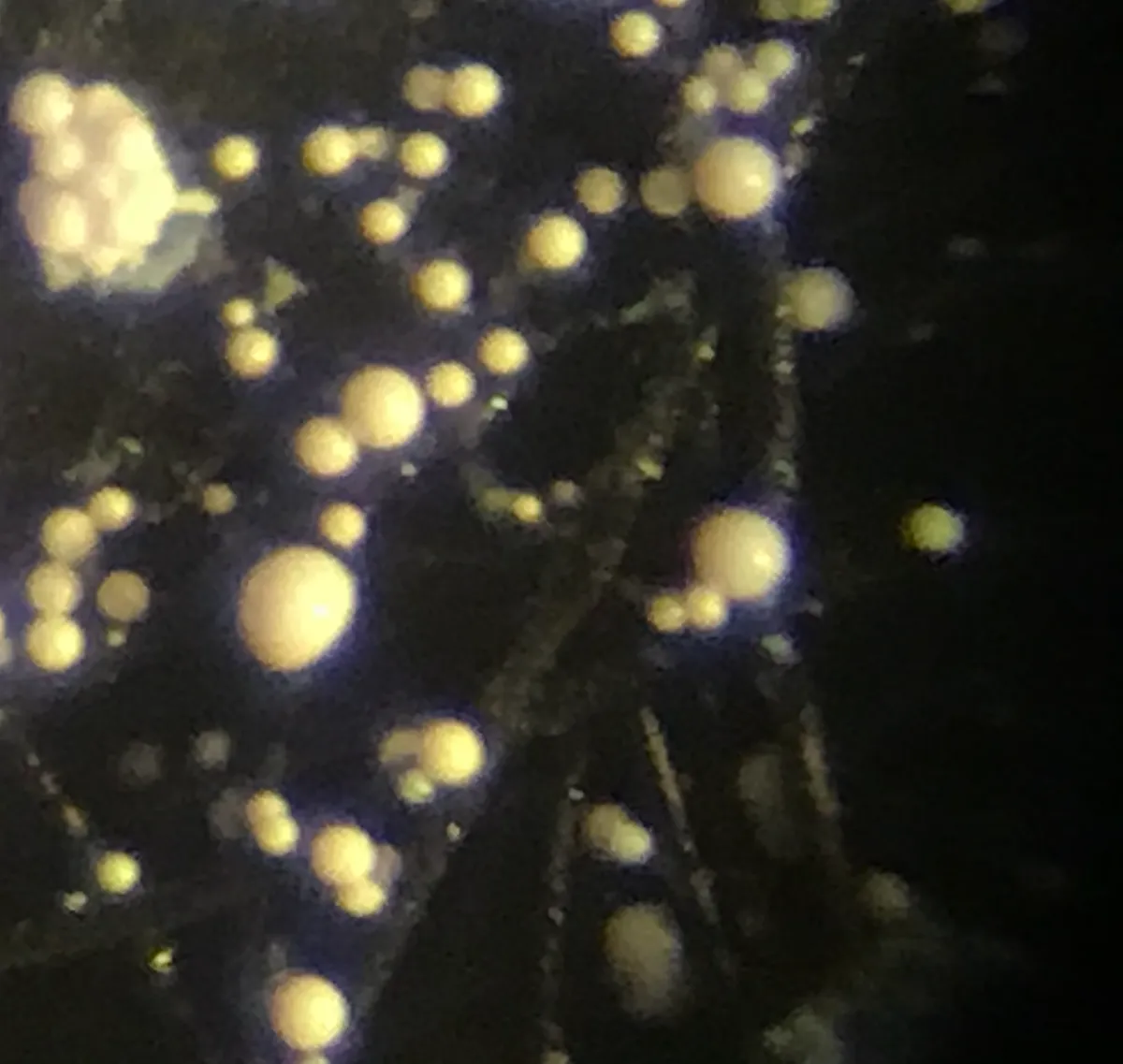
The Challenge
Particle size in spray drying is set by droplet size — and conventional two-fluid and pressure nozzles produce a broad droplet distribution, so the powder that comes out spans a wide particle range. For inhalable pharmaceuticals, microencapsulated actives, ceramic granules, and battery precursor powders, that spread means classification steps, wasted yield, and batch-to-batch variability. Small-orifice nozzles also clog on suspensions and shear-sensitive formulations degrade under high-pressure atomization.
Our Solution
MicroSpray ultrasonic nozzles atomize at a fixed frequency, producing droplets in a tight, predictable size band — so dried particles come out uniform without downstream classification. Atomization is gentle and low-shear, protecting proteins, cells, and encapsulated actives, and the large flow passage with a vibrating self-cleaning tip runs suspensions and slurries that clog conventional spray dryer nozzles. Retrofit kits adapt the nozzle to laboratory and pilot-scale spray dryers.
Why Ultrasonic Spray?
- ✓Narrow droplet size distribution produces uniform dried particles
- ✓Median droplet size set by operating frequency — repeatable run to run
- ✓Low-shear atomization protects proteins, biologics, and living cells
- ✓Runs suspensions and slurries without clogging small orifices
- ✓Higher usable yield — less out-of-spec powder to classify or discard
- ✓Microencapsulation of pharmaceuticals, flavors, and probiotics
- ✓Ceramic and battery precursor granulation with controlled granule size
- ✓Adapts to existing lab and pilot spray dryers with low liquid flow rates
Supporting Research
Peer-reviewed publications and technical literature relevant to this application area. Links open the publisher's site.
- Ultrasonic spray-drying process factors and their effect on the particle size of a water-based peptide-solution
Balantic-Nielsen et al.
Journal of Drug Delivery Science and Technology ·
- Radio Frequency - Assisted Ultrasonic Spray Freeze Drying for Pharmaceutical Protein Solids
Mutukuri et al.
Journal of Pharmaceutical Sciences ·
Open access · no paywall
- Tailoring Dry Microparticles for Pulmonary Drug Delivery: Ultrasonic Spray Freeze-Drying with Mannitol and Salbutamol Sulphate
Pasero et al.
Processes ·
Open access · no paywall
- Evaluation of ultrasonic nozzle with spray-drying as a novel method for the microencapsulation of blueberry's bioactive compounds
Tatar Turan, Cengiz & Kahyaoglu
Innovative Food Science & Emerging Technologies ·
- Using ultrasonic vacuum spray dryer to produce highly viable dry probiotics
Semyonov et al.
LWT - Food Science and Technology ·
- Effect of Spray Nozzle Design on Fish Oil-Whey Protein Microcapsule Properties
Drusch et al.
Journal of Food Science ·
Recommended Equipment
Zero Air Nozzle
Pure ultrasonic atomization without compressed air — the gentlest option for shear-sensitive formulations
View details →ThermalSpray™ High-Temperature Ultrasonic Nozzle
Operates near heated drying chambers up to 300°C without damage
View details →Common Questions from Research Groups
What droplet — and therefore particle — size can I expect?
Droplet size is set by the nozzle frequency: roughly 38–45 µm at 48 kHz, 30–35 µm at 60 kHz, and 12–15 µm at 120 kHz, with a narrow distribution. Final particle size then depends on your solids loading — a 30 µm droplet at 10% solids dries to roughly a 14 µm particle.
Can I retrofit an ultrasonic nozzle into my existing spray dryer?
Usually yes. The nozzle body is compact and mounts through standard NPT thread and flange adapters; you keep your existing chamber, airflow, and collection hardware and replace only the atomizer. Tell us your dryer model and we'll advise on the mounting and generator setup.
Will suspensions or high-solids feeds clog the nozzle?
The liquid path is a large open passage rather than a fine orifice, and the vibrating tip continuously redisperses solids, so suspensions and slurries that clog conventional spray-dryer nozzles run reliably. Very high viscosities may need dilution — send us your formulation details and we'll advise.
Can I buy just the nozzle and generator for my lab dryer?
Yes. Research groups routinely purchase standalone components — a nozzle, its generator/controller, and optionally a syringe pump for pulse-free feed — and integrate them into their own equipment. No complete system purchase is required.
Need tighter particle size from your spray dryer? Ask about ultrasonic nozzle retrofits.
Let's discuss your specific coating requirements.