
ENERGY APPLICATION
Fuel Cell & Electrolyzer Coating
Ultrasonic spray deposition for every layer of a fuel cell or electrolyzer: platinum-group catalyst inks on PEM membranes and gas diffusion layers, and YSZ, Ni-YSZ, LSCF, and LSM ceramic suspensions for solid oxide cells. Thin, uniform films with minimal material waste, from single-cell R&D to stack production.
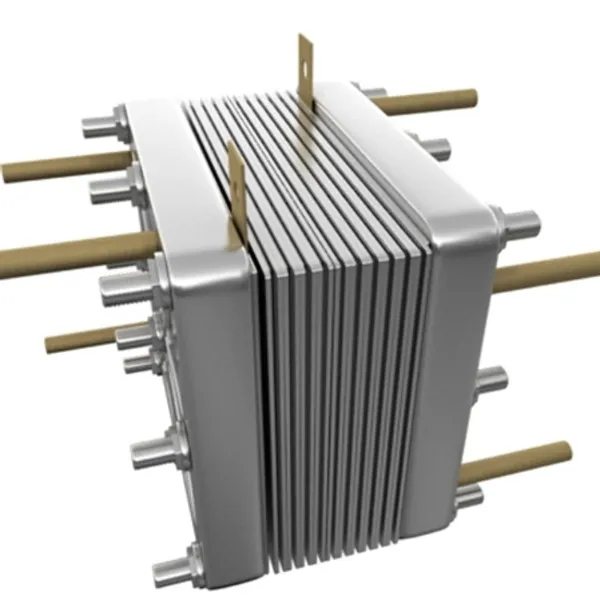
The Challenge
Low-temperature and high-temperature cells fail the same way: the active layer is too thick, uneven, or wasteful. PEM fuel cells and electrolyzers need ultra-thin, uniform catalyst layers of platinum, iridium oxide, or platinum-ruthenium, and conventional deposition wastes precious metal while producing inconsistent membrane electrode assemblies. Solid oxide cells need a dense electrolyte only microns thick next to electrodes with precisely tuned porosity, deposited uniformly over large areas and able to survive thermal cycling between room temperature and 600–900 °C. Tape casting, screen printing, and pressure spray guns give thick, uneven films, high overspray, and sintering results that vary from cell to cell.
Our Solution
MicroSpray ultrasonic nozzles atomize catalyst inks and ceramic suspensions into a narrow population of low-velocity droplets that settle onto the substrate without blowback, so film thickness and loading are set by flow rate and pass count rather than by the behavior of a pressure spray. The same platform coats a PEM catalyst layer at sub-milligram loadings and a YSZ electrolyte or LSCF cathode from a ceramic suspension, with electrode porosity tuned through drying conditions rather than ink formulation alone. It scales from button cells and single MEAs to production lines and stack fabrication.
Two Cell Families, One Deposition Platform
PEM and solid oxide cells ask different things of a coating process, but both come down to controlling how much liquid arrives per unit area and how wet it is when it lands. Ultrasonic atomization gives independent control of droplet size, flow rate, and drying, which is why one nozzle platform serves both.
PEM fuel cells and electrolyzers
Catalyst inks (Pt/C, Pt-Ru, IrO₂) are sprayed directly onto the membrane or the gas diffusion layer to build catalyst-coated membranes and gas diffusion electrodes. Airless, low-velocity deposition prevents overspray on fine-patterned membranes and keeps the ionomer-to-catalyst ratio stable through the layer. Published work with ultrasonic spray reports ultra-low platinum loadings at equal or better performance and reproducible MEAs; the same approach reduces iridium oxide loading on PEM electrolyzer anodes while maintaining high oxygen-evolution current densities. Direct methanol fuel cells benefit in the same way from fine Pt-Ru layers with lower methanol crossover.
Solid oxide fuel cells and electrolyzers
Ceramic suspensions of YSZ, Ni-YSZ, LSCF, LSM, and CGO are deposited as thin, uniform layers with the porosity of each layer set independently: dense electrolyte films under 10 µm, porous anodes and cathodes with high triple-phase-boundary density, and CGO interlayers that block interdiffusion between LSCF cathodes and YSZ electrolytes. Low-velocity droplets do not erode the layer beneath, so multi-layer cells are built without cracking or delamination. The same process serves solid oxide electrolyzer cells for hydrogen production and CO₂-to-syngas conversion, and perovskite interconnect coatings (LSCM, LSCrM) for stack assembly.
For a worked example of building a micron-scale ceramic film from an aqueous particle suspension, with the dispersion, wetting, plasma-activation and flash-drying steps that made it continuous, download our white paper Ultrasonic Spray Deposition of Micron-Scale Alumina Films (PDF).
Why Ultrasonic Spray?
- ✓Ultra-thin, uniform catalyst layers cut platinum-group metal loading without losing performance
- ✓Reproducible membrane electrode assemblies and catalyst-coated membranes with improved triple-phase boundary exposure
- ✓Airless, low-velocity droplets prevent blowback and overspray on fine-patterned membranes and preserve fine electrode microstructures
- ✓Iridium oxide loading reduction for PEM electrolyzer anodes at high OER current densities
- ✓Fine Pt-Ru layers for direct methanol fuel cells with higher current density and lower methanol crossover
- ✓Dense YSZ electrolyte films under 10 µm, reducing ionic resistance and raising power density
- ✓Independent control of anode (Ni-YSZ) and cathode (LSCF, LSM) porosity and thickness
- ✓CGO interlayer deposition to block interdiffusion between LSCF cathode and YSZ electrolyte
- ✓Compatible with Ni-YSZ cermets and perovskite oxides for cells operating at 600–900 °C, with improved redox cycling stability
- ✓Applicable to solid oxide electrolyzer cells for green hydrogen and CO₂-to-syngas conversion
- ✓Nanoparticle and ceramic ink compatibility: Pt/C, IrO₂, Ni-YSZ, LSCF, LSM, and CGO dispersions
- ✓Scalable from button cells and single-MEA R&D to production-line MEA fabrication and planar or tubular stacks
Supporting Research
Peer-reviewed publications and technical literature relevant to this application area. Links open the publisher's site.
- Thin layer electrolyte impregnation into porous anode-supported fuel cell by ultrasonic spray pyrolysis
Ko, Chiu & Wu
International Journal of Hydrogen Energy ·
- Ultra-low Pt loading for proton exchange membrane fuel cells by catalyst coating technique with ultrasonic spray coating machine
Huang et al.
International Journal of Hydrogen Energy ·
- A novel method for preparing proton exchange membrane fuel cell electrodes by the ultrasonic-spray technique
Millington, Whipple & Pollet
Journal of Power Sources ·
- Fabrication of gradient porous LSM cathode by optimizing deposition parameters in ultrasonic spray pyrolysis
Hamedani et al.
Materials Science and Engineering: B ·
Recommended Equipment
Vortex Nozzle
Wide, uniform pattern for flat membranes, gas diffusion layers, and large-area cell substrates
View details →ThermalSpray™ High-Temperature Ultrasonic Nozzle
Built for elevated-temperature spray environments and ceramic suspension deposition on solid oxide cells
View details →Liquid Delivery (Dosing Pump)
Pulse-free ink and suspension feed for repeatable loading, layer to layer
View details →Coating a PEM catalyst layer or a solid oxide cell? Contact us to discuss your ink, substrate, and loading target.
Let's discuss your specific coating requirements.